2026-10-23 ·
How to Spot Failing Spray Foam After Sheffield Winters
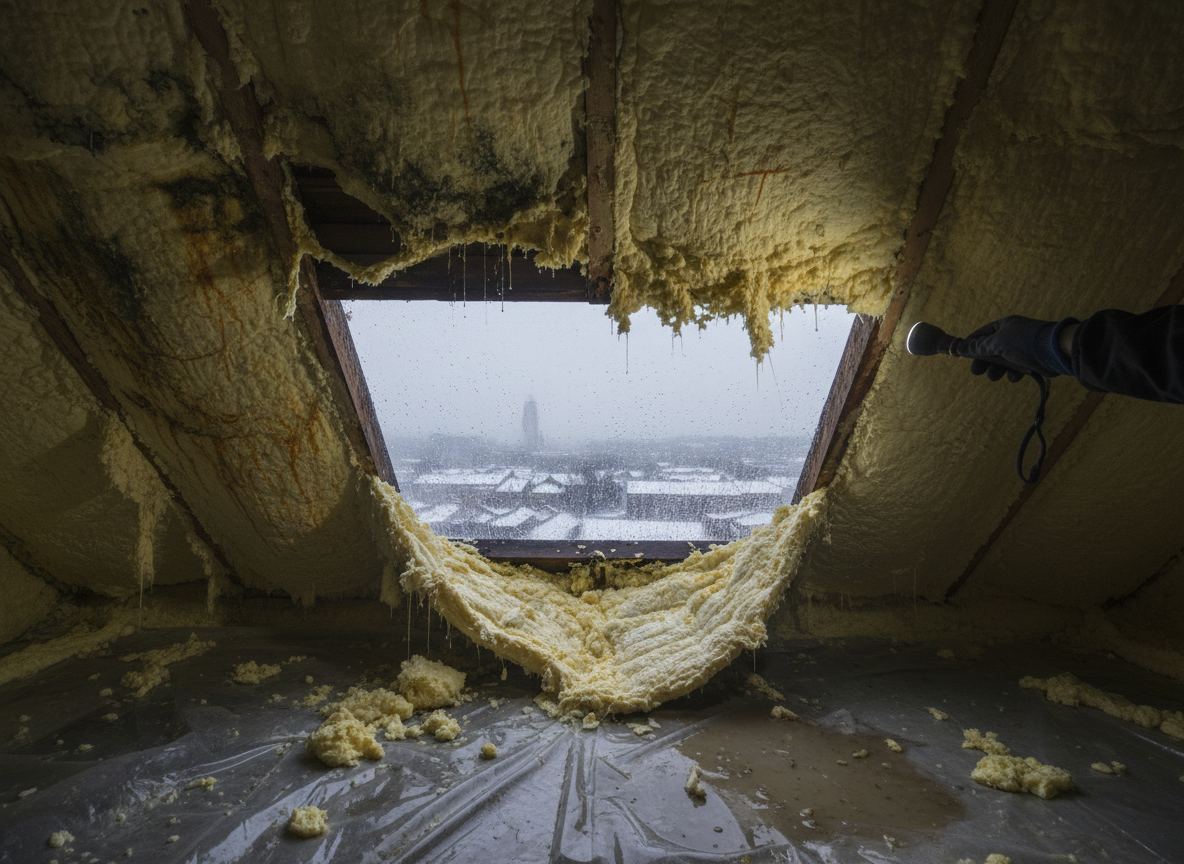
Sheffield winters with repeated freeze-thaw cycles cause spray foam to fail most often between 6 and 12 years after installation. Look first for surface cracking along rafters, soft spots when pressed, or dark water stains on loft boards in homes across Sheffield City Centre and surrounding terraces.
Visible Surface Changes After Freeze-Thaw Cycles
Winter temperatures in the Sheffield area swing between sub-zero nights and milder days, forcing closed-cell foam to expand and contract repeatedly. This produces hairline cracks that widen over successive seasons, often starting near roof vents or along the eaves of Victorian and Edwardian properties common in Sheffield and Rotherham. Homeowners also notice yellowing or chalking on the foam surface where UV exposure through skylights combines with trapped moisture. These changes appear first in north-facing lofts where snow lingers longest and melting water sits against the insulation. Checking with a strong torch from the loft hatch reveals these patterns before they spread into living spaces below.
Moisture and Odour Indicators in Sheffield Lofts
Persistent damp patches on loft insulation or ceiling plaster signal water bypassing the foam layer after winter storms. In Barnsley and Chesterfield terraces, older roof timbers hold moisture longer because of limited ventilation, creating musty smells that intensify after snowmelt. Pressing a gloved hand into the foam reveals spongy areas where closed-cell structure has broken down and absorbed water. Black mould streaks along rafters often follow the same routes as meltwater running from blocked gutters common on Sheffield's hilly streets. An insulation assessment confirms whether the foam itself or adjacent timber needs attention before rot sets in.
Checking Attachment and Structural Movement
Failing foam loses adhesion to rafters and joists after several Sheffield winters, allowing sections to sag or detach under their own weight. In properties around Stocksbridge and Dronfield, older roof structures with original timber movement exacerbate this separation. Tapping the surface with a plastic mallet produces a hollow sound where the bond has failed, while solid areas remain firm. Gaps that open between foam boards and masonry walls let cold air and moisture enter, raising heating costs and risking condensation on metal fixings. Homeowners in Doncaster and Worksop report similar issues on commercial roofs where thermal bridging accelerates the same process.
When to Arrange Professional Inspection
Schedule checks in early spring once snow has cleared, before summer heat masks winter damage. The article on local challenges removing spray foam from older Sheffield homes explains how 1930s and pre-war stock differs from newer builds. If multiple signs appear together, book a targeted loft spray foam removal rather than patching. The post on scheduling around Yorkshire weather outlines the best windows between April and October when daytime temperatures stay above 10°C for safe removal work.