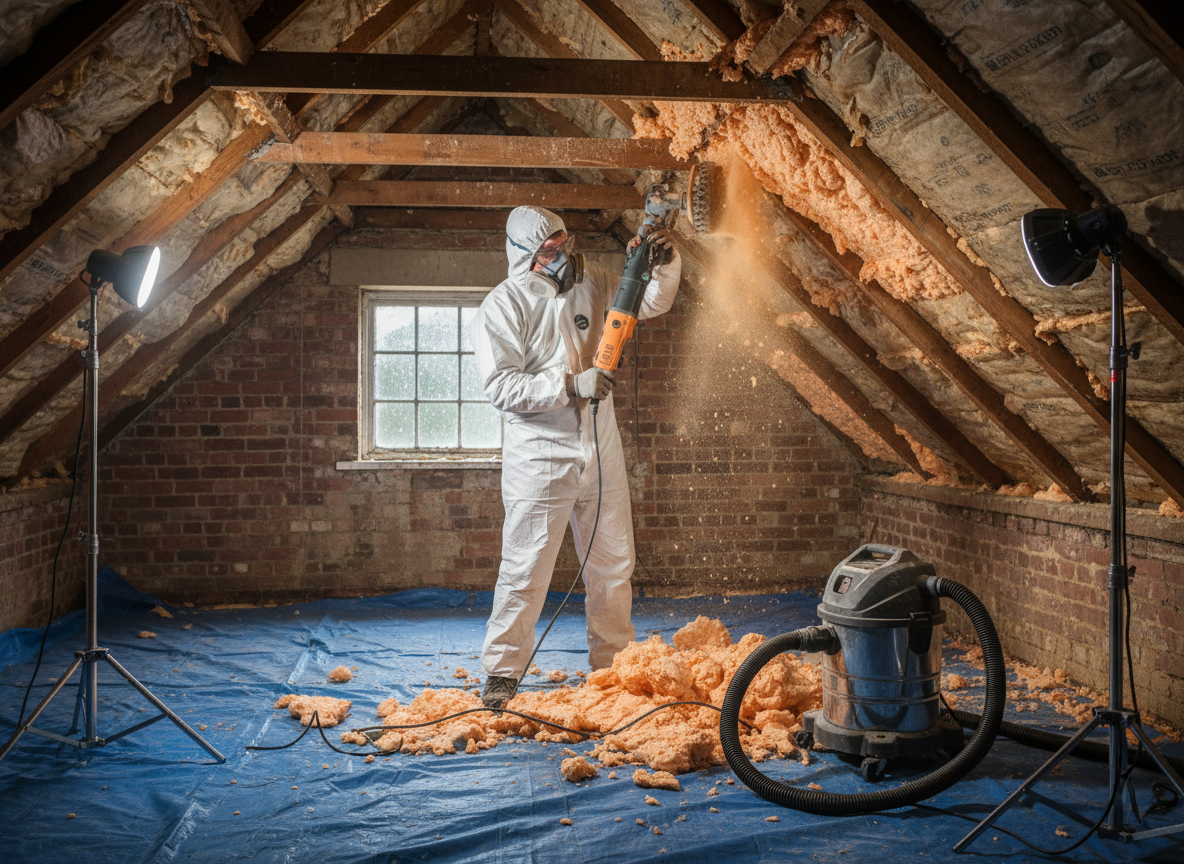
Sheffield's older housing stock, particularly the solid-walled Victorian terraces found in areas like Walkley and Nether Edge, often received spray foam insulation in lofts during the 2000s push for energy efficiency. The region's frequent rainfall and high humidity mean that closed-cell foam can trap moisture against timber joists and brickwork, leading to rot that only becomes visible once the foam is cut away. Removal crews must work carefully around original lath and plaster ceilings that are common in these homes, using negative pressure setups to prevent dust from migrating into living spaces below.
Post-war semis and council-built properties in Hillsborough and Ecclesall frequently have thinner foam layers applied over mineral wool, creating mixed insulation that complicates clean extraction. Cold winters in the Sheffield area cause the foam to contract and crack, allowing water ingress from the Pennine weather patterns to reach roof timbers. Technicians routinely check for asbestos in older loft boarding before starting, and they ventilate the space thoroughly afterward because the damp local climate quickly reintroduces condensation once insulation is gone.
Edge cases include listed buildings around the city centre where foam was injected into cavity walls, requiring hand removal rather than mechanical methods to avoid damaging stonework. Homeowners in the S1 to S10 postcodes often discover the foam was applied over electrical cables without proper separation, so isolation of circuits forms part of every job. Proper disposal follows Environment Agency rules for the Sheffield area, with waste taken to licensed sites rather than general landfill.
Technician insight
In Sheffield, the thing that catches most people out with Residential Spray Foam Removal is the solid brick walls in pre-1919 terraces around Walkley and Crookes. Once the foam is gone the lack of a vapour barrier lets the frequent Pennine rain drive moisture straight into the timbers, and homeowners who skip proper ventilation end up with worse damp than before.
Loft Foam Removal in Walkley Terrace
A 1905 terraced house in Walkley had closed-cell foam filling the loft space. Inspection showed moisture trapped against the ridge beam from recent heavy rain. The foam was sectioned out by hand, timbers treated, and the loft ventilated with new soffit vents suited to Sheffield's wet winters. The owners reported no further condensation after six months.
How it works
- 1
Site Assessment
Inspect loft or wall cavities in the Sheffield property to determine foam type, depth, and any hidden damage to timbers or electrics.
- 2
Containment Setup
Install dust barriers and negative pressure equipment to protect living areas, especially important in terraced homes where neighbours share walls.
- 3
Foam Extraction
Cut and remove the spray foam in sections, taking care around original roof structures common in South Yorkshire housing.
- 4
Cleanup and Ventilation
Clear all residue, dispose of waste at licensed Sheffield facilities, and restore airflow to prevent future condensation issues.
Pricing
Costs depend on property age, foam thickness, and access difficulty in Sheffield homes. Upfront quotes provided after inspection.