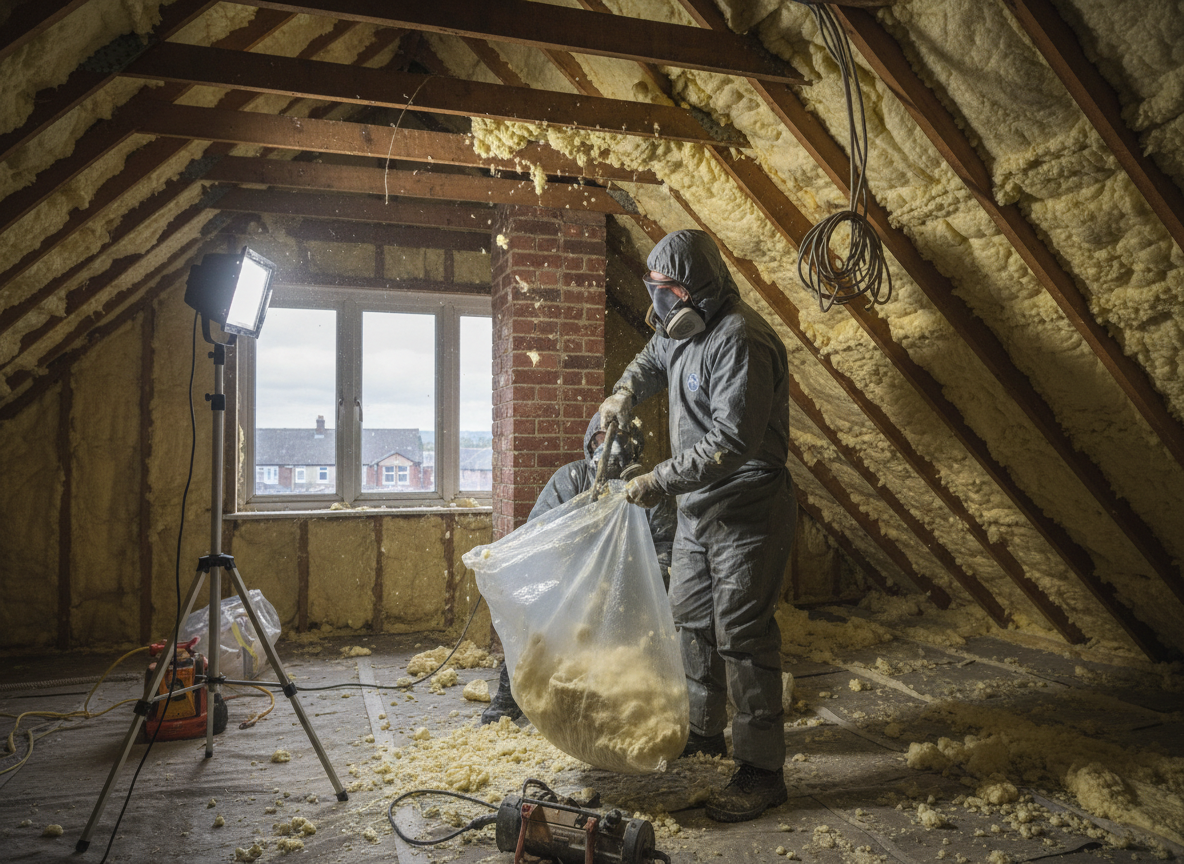
Sheffield's older housing stock, particularly the Victorian and Edwardian terraces common in areas like Walkley, Nether Edge and Crookes, often features narrow loft hatches and limited headroom that complicate foam extraction. Spray foam installed in these spaces frequently bonds tightly to rafters and joists, and the region's frequent rain and high humidity can trap moisture beneath the material, leading to hidden rot if removal is not thorough. Technicians must work methodically to avoid damaging original timber while containing dust and debris that could affect the rest of the house.
Removal begins with isolating the loft to prevent particles spreading through the property, followed by careful mechanical and manual stripping of the foam layers. In Sheffield's colder months, condensation issues worsen when foam is left in place, so full extraction includes checking for and addressing any underlying damp before the space is left ventilated. Disposal follows local waste regulations for the expanded polyurethane material, which cannot simply be binned with household rubbish.
Homeowners in the Sheffield City Centre and surrounding districts sometimes discover foam has been applied over older insulation or electrical wiring, creating additional hazards during removal. Proper sequencing prevents damage to these elements and ensures the attic can be reinsulated safely afterward if required. The work demands patience in confined spaces typical of South Yorkshire terraces, where rushing risks incomplete removal or structural nicks.
Technician insight
In Sheffield, the thing that catches most people out with Attic spray foam removal is how often older terraced houses in areas like Walkley have foam applied over original lath and plaster ceilings with almost no working room, and the damp Pennine weather means any missed moisture pockets will cause problems months later.
Walkley Terrace Loft Clearance
A homeowner in a 1900s terraced house in Walkley reported persistent loft odours after heavy winter rain. Inspection revealed spray foam trapping moisture against rafters. The foam was stripped in sections to protect the narrow access and original timbers, debris was contained and removed, and the space was left ventilated. The musty smell disappeared once proper airflow returned.
How it works
- 1
Initial Loft Assessment
Inspect access points, foam depth, and any signs of damp or wiring issues in Sheffield properties.
- 2
Site Protection And Containment
Seal the loft hatch and protect floors and belongings below before starting extraction.
- 3
Foam Extraction
Remove the spray foam layer by layer using specialist tools suited to tight attic spaces.
- 4
Cleanup And Ventilation Check
Clear all debris, inspect for remaining material, and ensure the loft can breathe properly.
Pricing
Pricing depends on attic size, foam thickness, and access challenges common in Sheffield terraces.