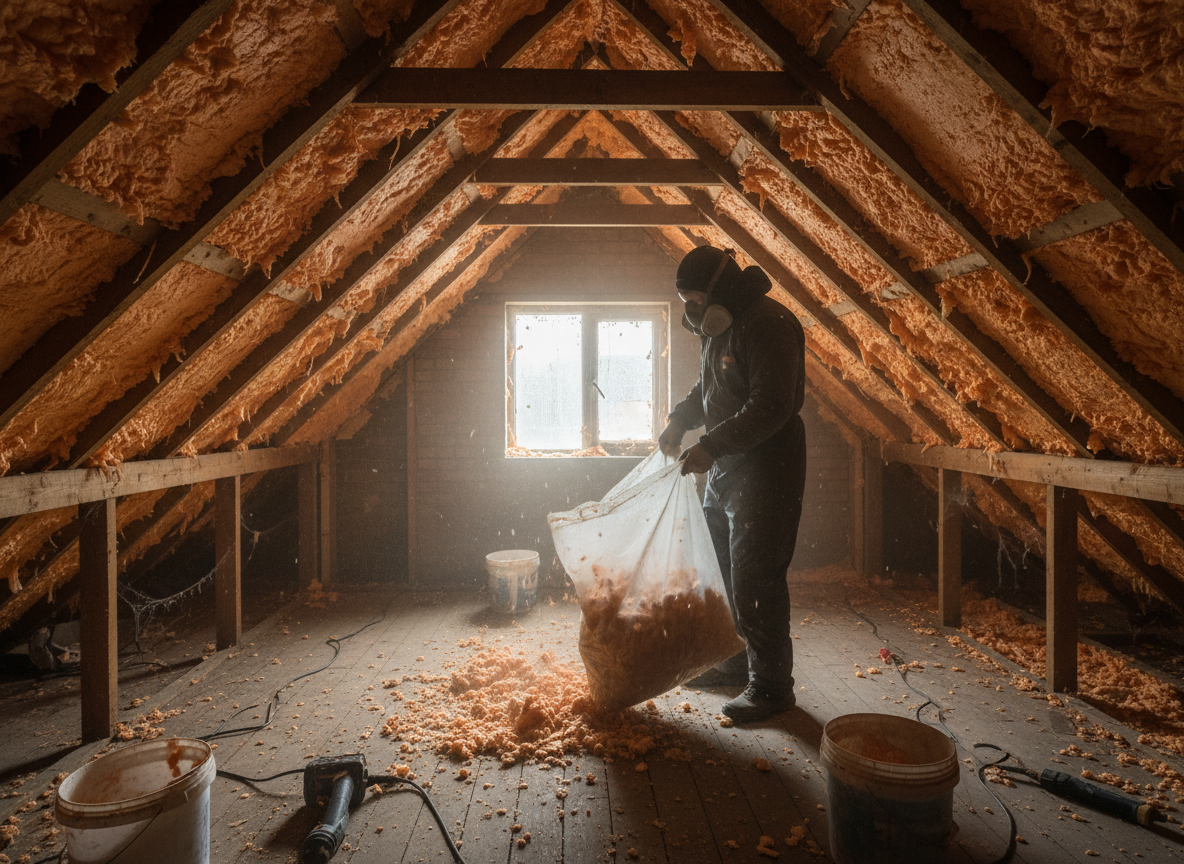
Spray foam insulation removal in Sheffield often involves older Victorian and Edwardian terraces common in districts like Walkley and Crookes. These properties frequently have foam applied directly to lath and plaster or between rafters in pitched roofs. The process requires careful cutting and peeling to avoid damaging original timber or ceilings, especially where foam has expanded into gaps around chimneys and party walls. Moisture trapped from Sheffield's frequent rain can make the foam heavier and more adhesive, extending the time needed for safe extraction.
Homeowners in the Sheffield area also encounter foam in converted lofts of 1930s semis around Ecclesall and Nether Edge. Here the material may cover electrical wiring or pipework, demanding extra caution during removal to prevent damage. Once the foam is gone, surfaces must be cleaned of residue before any new insulation or boarding goes in. The hilly terrain around the city centre means some properties have limited access for equipment, so jobs often require hand tools and sectional removal rather than large machinery.
Edge cases include foam that has degraded under years of roof leaks common in South Yorkshire's wet winters. In these situations the material breaks into sticky fragments that cling to brickwork and joists. Proper disposal is essential because the waste cannot go into standard skips. Our team works from Unit 1, 9 Brittain Street, Sheffield City Centre, S1 4RJ and remains available 24/7 to handle urgent cases where foam failure has caused ceiling sagging or water staining.
Technician insight
In Sheffield the thing that catches most people out with spray foam insulation removal is how tightly the foam bonds to the lath and plaster in pre-1919 terraces around the city centre; once winter damp from the Pennines gets behind it the material turns into a heavy, sticky mess that takes far longer to strip cleanly than homeowners expect.
Walkley Terrace Loft
Foam in a 1900s terrace loft had started sagging after a roof leak. We found it had wrapped around old wiring and filled gaps between rafters. The team cut and peeled it in sections over two days, cleaned the timber and removed all waste. The ceiling stayed intact and the owner could proceed with new insulation.
How it works
- 1
Site Assessment
We inspect the property to identify foam type, depth, and any hidden services or structural issues.
- 2
Containment Setup
Dust sheets and negative air machines protect living spaces while we work in the loft or void.
- 3
Mechanical Removal
Foam is cut into sections and peeled away using specialist tools to limit damage to original surfaces.
- 4
Surface Cleaning
Residue is scraped and vacuumed, leaving joists and plaster ready for inspection or new works.
- 5
Waste Disposal
All foam waste is bagged and taken to licensed facilities, with the site left clean and safe.
Pricing
Cost depends on property age, foam thickness and access difficulty in Sheffield terraces and lofts.